Coolants & Oils
ELCI Vacuum Pump Oil ELC-A09
Parça No: ELC-A09
- It minimizes friction in the moving parts of the vacuum pump.
- It reduces the clogging rate of the pump.
- It is highly effective against oxidation.
High-performance vacuum pump oil for Air Conditioning Gas Filling Devices and General Purpose Vacuum Pumps
ISO 68 DIN 51519
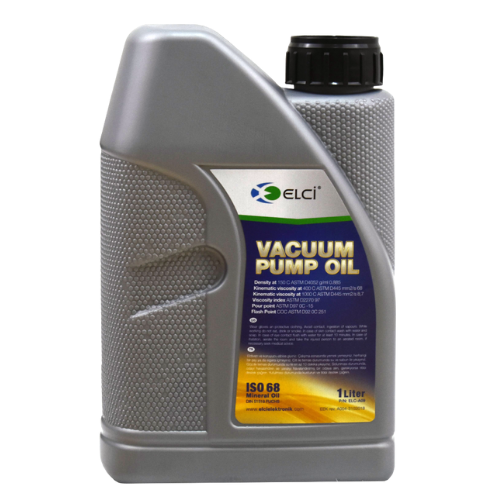
ELCI Vacuum Pump Oil ELC-A09
Parça No: ELC-A09
- It minimizes friction in the moving parts of the vacuum pump.
- It reduces the clogging rate of the pump.
- It is highly effective against oxidation.
High-performance vacuum pump oil for Air Conditioning Gas Filling Devices and General Purpose Vacuum Pumps
ISO 68 DIN 51519
Advantages
● High oxidative and thermal stability
● Withstands compression temperatures up to 110 degrees.
● Separation behavior from good water
● Low evaporation losses
● Density: 0.961 g/cm³
● Good air release capability
● Low foaming tendency
● Protection against wear and corrosion.
Technical Data
● Density at 15°C ASTM D4052: 0.885 g/ml
● Flash Point COC ASTM D92: 251 °C
● Kinematic Viscosity at 100°C ASTM D445: 8,7 mm²/s
● Viscosity Index ASTM D2270: 97
● Pour Point ASTM D97: -15 °C
● Kinematic Viscosity at 40°C ASTM D445: 68 mm²/s
Features and Benefits
● High viscosity index
A high viscosity index minimizes viscosity changes related to temperature variations.
● Anti-wear
Additives and high-quality base oil control reduce wear and extend equipment life.
● Foam Control
The special anti-foaming agent ensures rapid separation of air bubbles to reduce drag and increase oil and equipment life and performance.
● Oxidation Control
Excellent oxidation and thermal stability ensure a long oil and equipment life.
POE 100 1 LT Oil for Hybrid and Electric Vehicles
Yüksek ısılara dayanımlı iletken olmayan klima yağı.
R134a/R1234yf Soğutucu madde ve elektrikli klima kompresörlerini kullanan ( hibrit, start/stop, elektrikli ) araç klima sistemleri için özel POE (polyester) klima kompresörü yağı.

Product Features
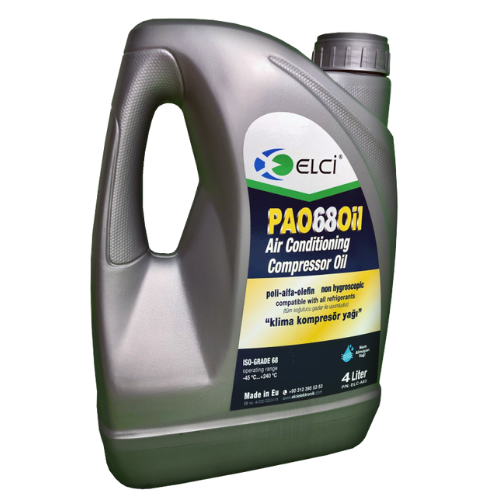
- PAO Oil 68 is not hygroscopic; unlike other oils, it does not absorb moisture from the ambient air.
- It can be used as an alternative to the various PAG oils offered for R134a.
- In short, you only need to fill one type of oil instead of three different PAG oils.
- PAO Oil 68 helps improve the performance of your air conditioning system.
POE 100 1 LT Oil for Hybrid and Electric Vehicles
Yüksek ısılara dayanımlı iletken olmayan klima yağı.
R134a/R1234yf Soğutucu madde ve elektrikli klima kompresörlerini kullanan ( hibrit, start/stop, elektrikli ) araç klima sistemleri için özel POE (polyester) klima kompresörü yağı.
Features
● İçerik: 1 Lt.
● Melting point: -27 °C
● Kinematic oil-based viscosity: 11 mm²/s
● Kinematic oil-based viscosity: 11 mm²/s
● It is long-lasting and stable.
● Compatible with air conditioning system components.
● PAO oils are primarily designed for use as compressor oil in original equipment R134a air conditioning systems.
● Density: 0.961 g/cm³
● Solubility in water: No
● Oil-based fluidity conditions: at 100°C
● Parça No: ELC-A47
● Can be mixed with R134a.
● Operating temperature: -45°C to +240°C
● Provides maximum protection against compressor wear.
PAO Moisture-Free Air Conditioning Oil
TECHNICAL DETAILS
R1234YF compressor oils
R1234YF IS A HIGH-QUALITY OIL WITH A VISCOSITY OF 46, SUITABLE FOR REFRIGERANT-BASED SYSTEMS.
THESE OILS MEET THE CHEMICAL COMPATIBILITY REQUIREMENTS FOR LONG-TERM SYSTEM OPERATION WHEN USED IN R1234YF SYSTEMS.
When selecting lubricants for HFO 1234yf systems, there is a market acceptance that specialized synthetic ‘double-ended cap’ polyalkylene glycols (‘PAGs’) are the preferred OEM choice.
However, there are specific technical factors to consider, indicating that the dual and single-ended PAGs used to date in R134a systems require special attention before being used with R1234yf.
From a mechanical or thermal standpoint, only modest design changes are required for HFO-based MAC systems compared to R134a, and in principle, the lubricant performance requirements for R1234yf systems are very similar to those of R134a. However, it is the chemical structural difference of R1234yf compared to R134a that should be considered, as this significantly affects the miscibility of the lubricant with the basefluid.
Specifically, the double bond in the R1234yf molecular structure results in a high level of chemical reactivity in the refrigerant system:
This is advantageous in terms of the refrigerant's environmental characteristics, but disadvantageous in terms of chemical stability within a closed refrigeration system. Specifically, the lubricant must be designed to counteract instability and maximize the miscibility of the refrigerant, ensuring the correct lubricant selection for the industry and R1234yf systems.
- Manufactured according to ISO 68 standards.
- Compatible with all air conditioning oils/gases.
- It reduces friction.
- It is not hygroscopic (DOES NOT ABSORB MOISTURE)
- Saves energy
- Operating temperatures: -40°C to +240°C (Celsius)
- Packaging: 1000 ml


Product Features
- PAO Oil 68 is not hygroscopic; unlike other oils, it does not absorb moisture from the ambient air.
- It can be used as an alternative to the various PAG oils offered for R134a.
- In short, you only need to fill one type of oil instead of three different PAG oils.
- PAO Oil 68 helps improve the performance of your air conditioning system.
PAO Moisture-Free Air Conditioning Oil
TECHNICAL DETAILS
R1234YF compressor oils
R1234YF IS A HIGH-QUALITY OIL WITH A VISCOSITY OF 46, SUITABLE FOR REFRIGERANT-BASED SYSTEMS.
THESE OILS MEET THE CHEMICAL COMPATIBILITY REQUIREMENTS FOR LONG-TERM SYSTEM OPERATION WHEN USED IN R1234YF SYSTEMS.
When selecting lubricants for HFO 1234yf systems, there is a market acceptance that specialized synthetic ‘double-ended cap’ polyalkylene glycols (‘PAGs’) are the preferred OEM choice.
However, there are specific technical factors to consider, indicating that the dual and single-ended PAGs used to date in R134a systems require special attention before being used with R1234yf.
From a mechanical or thermal standpoint, only modest design changes are required for HFO-based MAC systems compared to R134a, and in principle, the lubricant performance requirements for R1234yf systems are very similar to those of R134a. However, it is the chemical structural difference of R1234yf compared to R134a that should be considered, as this significantly affects the miscibility of the lubricant with the basefluid.
Specifically, the double bond in the R1234yf molecular structure results in a high level of chemical reactivity in the refrigerant system:
This is advantageous in terms of the refrigerant's environmental characteristics, but disadvantageous in terms of chemical stability within a closed refrigeration system. Specifically, the lubricant must be designed to counteract instability and maximize the miscibility of the refrigerant, ensuring the correct lubricant selection for the industry and R1234yf systems.
- Manufactured according to ISO 68 standards.
- Compatible with all air conditioning oils/gases.
- It reduces friction.
- It is not hygroscopic (DOES NOT ABSORB MOISTURE)
- Saves energy
- Operating temperatures: -40°C to +240°C (Celsius)
- Packaging: 1000 ml
Uses and Effects of PAO Oil 68
PAO Oil 68 molecules adhere to all surfaces in the system, repelling other molecules and remaining as a thin layer on the surface of system components.
Because the molecules don't attempt to bond with each other, this oil layer is simply a "thick" molecule. Therefore, unlike many other oils, there is no risk of oil buildup in the evaporator and the resulting cooling loss when using PAO Oil 68.
Because PAO Oil 68 only binds to a small amount of coolant, only a tiny portion of the oil circulates within the system. The rest remains where it is truly needed – in the compressor. An oil film on the components improves sealing and reduces friction between moving parts in the compressor.
This reduces operating temperature and wear. This plays a significant role in operational safety and noise reduction, while also enabling shorter operating times and lower energy consumption by the compressor.
Can PAO Oil 68 be used for conversions? Is PAO Oil 68 compatible with other oils?
PAO Oil 68 has no harmful effects on fluoroelastomer materials such as hoses or gaskets and is ideal for converting R12 to R134a refrigerant.
PAO Oil 68 is compatible with many other lubricants and coolants, making it suitable for complete system oil replenishment and replacement. Due to its independent molecular structure and density, PAO Oil 68 mixes with other oils to a certain degree, but separates from them again when “resting” and does not form a long-term compound.
This ensures that the required viscosity of the oils is maintained and that there is no change in overall viscosity. Thanks to the unique combination of highly refined, synthetic oil and special performance-enhancing additives, PAO Oil 68 has a very wide operating range (-45 to 240 °C).
Can PAO Oil 68 be used if there are moisture problems?
PAO Oil 68 is non-hygroscopic; unlike other oils, it does not absorb moisture from the ambient air. This means that moisture problems, such as icing of components or acid formation, can be easily prevented using PAO Oil 68. PAO Oil 68 has significantly greater application possibilities and storage capabilities compared to conventional oils.
Special features
- There is no risk of oil accumulation in the evaporator or deterioration in cooling performance.
- An oil film on the components improves the seal.
- Reduced friction between components.
- Lower energy consumption by the compressor.
- A unique combination of highly refined, synthetic oil and special performance-enhancing additives.
- Very wide operating range (-45 to 240 °C)
Special features
- There is no risk of oil accumulation in the evaporator or deterioration in cooling performance.
- An oil film on the components improves the seal.
- Reduced friction between components.
- Lower energy consumption by the compressor.
- A unique combination of highly refined, synthetic oil and special performance-enhancing additives.
- Very wide operating range (-45 to 240 °C)
Uses and Effects of PAO Oil 68
PAO Oil 68 molecules adhere to all surfaces in the system, repelling other molecules and remaining as a thin layer on the surface of system components.
Because the molecules don't attempt to bond with each other, this oil layer is simply a "thick" molecule. Therefore, unlike many other oils, there is no risk of oil buildup in the evaporator and the resulting cooling loss when using PAO Oil 68.
Because PAO Oil 68 only binds to a small amount of coolant, only a tiny portion of the oil circulates within the system. The rest remains where it is truly needed – in the compressor. An oil film on the components improves sealing and reduces friction between moving parts in the compressor.
This reduces operating temperature and wear. This plays a significant role in operational safety and noise reduction, while also enabling shorter operating times and lower energy consumption by the compressor.
Can PAO Oil 68 be used for conversions? Is PAO Oil 68 compatible with other oils?
PAO Oil 68 has no harmful effects on fluoroelastomer materials such as hoses or gaskets and is ideal for converting R12 to R134a refrigerant.
PAO Oil 68 is compatible with many other lubricants and coolants, making it suitable for complete system oil replenishment and replacement. Due to its independent molecular structure and density, PAO Oil 68 mixes with other oils to a certain degree, but separates from them again when “resting” and does not form a long-term compound.
This ensures that the required viscosity of the oils is maintained and that there is no change in overall viscosity. Thanks to the unique combination of highly refined, synthetic oil and special performance-enhancing additives, PAO Oil 68 has a very wide operating range (-45 to 240 °C).
Can PAO Oil 68 be used if there are moisture problems?
PAO Oil 68 is non-hygroscopic; unlike other oils, it does not absorb moisture from the ambient air. This means that moisture problems, such as icing of components or acid formation, can be easily prevented using PAO Oil 68. PAO Oil 68 has significantly greater application possibilities and storage capabilities compared to conventional oils.
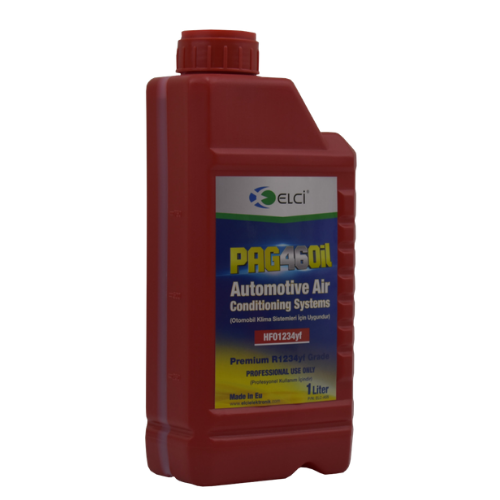
Special PAG 46 R1234yf Oil
When selecting lubricants for HFO 1234yf systems, there is a market acceptance that special synthetic ‘double-ended cap’ polyalkylene glycols (‘PAGs’) are the preferred OEM choice. However, there are specific technical factors that need to be considered, indicating that both double-ended and single-ended PAGs used in R134a systems to date require special attention before being used with R1234yf.
- Parça No: ELC-A55
- It is designed as compressor oil for air conditioning systems.
- It provides maximum protection against compressor wear.
- It is long-lasting and stable.
- These oils are specially formulated for R1234yf (new generation gas) engines.
- It is compatible with air conditioning system components.
POE100 is a high-temperature resistant, non-conductive air conditioning oil specifically designed for hybrid and electric vehicle air conditioning compressors.
R134a/R1234yf Soğutucu madde ve elektrikli klima kompresörlerini kullanan ( hibrit, start/stop, elektrikli ) araç klima sistemleri için özel POE (polyester) klima kompresörü yağı.
Features;
Contents: 1 liter.
Contents: 1 liter.
Kinematic oil-based viscosity: 11 mm²/s
Oil-based fluidity conditions: at 100°C
Melting point: -27 °C
Melting point: -27 °C
Solubility in water: No
Fluidity/density: Liquid
Special PAG 46 R1234yf Oil
When selecting lubricants for HFO 1234yf systems, there is a market acceptance that special synthetic ‘double-ended cap’ polyalkylene glycols (‘PAGs’) are the preferred OEM choice. However, there are specific technical factors that need to be considered, indicating that both double-ended and single-ended PAGs used in R134a systems to date require special attention before being used with R1234yf.
- Parça No: ELC-A55
- It is designed as compressor oil for air conditioning systems.
- It provides maximum protection against compressor wear.
- It is long-lasting and stable.
- These oils are specially formulated for R1234yf (new generation gas) engines.
- It is compatible with air conditioning system components.
POE100 is a high-temperature resistant, non-conductive air conditioning oil specifically designed for hybrid and electric vehicle air conditioning compressors.
R134a/R1234yf Soğutucu madde ve elektrikli klima kompresörlerini kullanan ( hibrit, start/stop, elektrikli ) araç klima sistemleri için özel POE (polyester) klima kompresörü yağı.
Features;
Contents: 1 liter.
Contents: 1 liter.
Kinematic oil-based viscosity: 11 mm²/s
Oil-based fluidity conditions: at 100°C
Melting point: -27 °C
Melting point: -27 °C
Solubility in water: No
Fluidity/density: Liquid